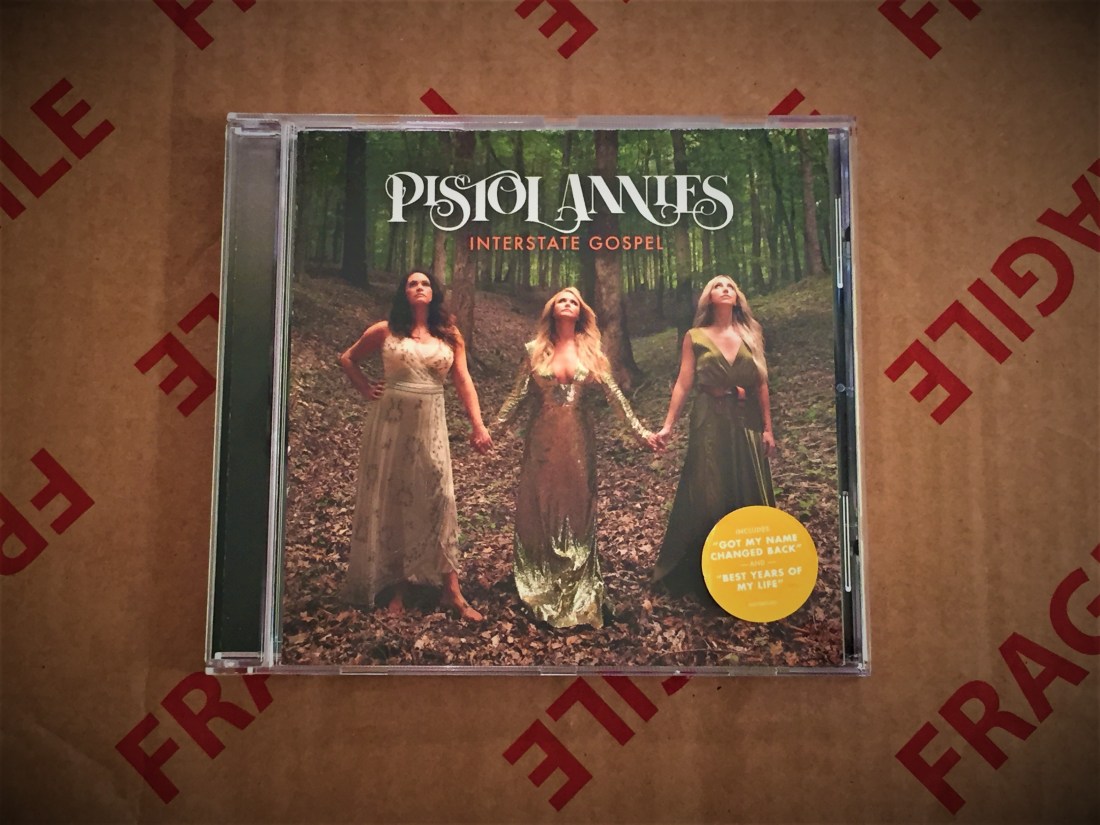
On paper, the Pistol Annies were always going to be a class act. All three members are talented individual singer-songwriters, with a clutch of awards and nominations between them. Each one also brings a unique brand to the table.
Ashley Monroe is queen of the melancholy ballad – her crystal-clear voice is one of the most remarkable in country music today. The dark horse of the band, Angaleena Presley, provides a hard, gritty edge derived from her outlaw roots. And Miranda Lambert, the original instigator of the Annies seven years ago, is a master of lyrics that can veer from biting sass to painful anguish in just a few lines.
But their third album, Interstate Gospel, shows a band much greater than the sum of their parts. Their previous acclaimed offerings, Hell on Heels (2011) and Annie Up (2013), established the band as chronicler of real-life trials and tribulations, but here they properly find their groove. Lambert has described their music as growing with them, and this record is inevitably ‘more grown up’ after the milestones that have occurred since their sudden hiatus in 2013 – Lambert’s high-profile divorce from Blake Shelton, and Presley and Monroe’s children. The album’s sound also reflects a more mature feel – the arrangements are more polished, with a fuller, richer timbre and intricate instrumentation.
There is sense of serendipity about the Annies. In an interview on the Bobby Bones show, they explained how the band made the decision to reunite. One night while writing, Lambert texted the others a verse and chorus for what would become ‘When I Was His Wife’. Presley and Monroe duly replied with a verse each, and the much-awaited third record was born.
This sense of mutual support – especially those relationships between women – has always been a core feature of the Annies’ songwriting. One of the standout songs on the record, ‘Best Years of My Life’, is a portrayal of domestic drudgery and a woman feeling lost in the prime years of her life. A telling example of verisimilitude of their stories, it was inspired by a text from one of Miranda’s friends, requesting ‘a song about an overworked housewife’. The lyrics are studded with breathtaking lines, including my personal favourite of the record: ‘I’ve got a hankering for intellectual emptiness’. It reminds me a lot of ‘Girls Like Us’ from Annie Up – in both songs, there is an appreciation of the resilience of ordinary women.
Another gem is Cheyenne: a beautiful, fragile song about the pros and pitfalls of fleeting relationships. At its heart is the opposition between a woman who breaks hearts and another who envies Cheyenne’s ability to be cold and detached. (If country music had a Bechdel test, this song would definitely pass.)
‘Milkman’ also contrasts two women: the self-sacrificing mother with her rebellious daughter. Again, neither song gives a resolved answer to which is the ‘ideal’ woman, but encourages listeners to reflect on their own choices. Indeed, Monroe has described Interstate Gospel as like a ‘hymn book’ – a self-help guide for the sisterhood.
As much as the record has broad, shared themes, the individual identities of each member do also get a chance to shine through. The experimental form of ‘5 Acres of Turnips’ and ‘Commissary’ owe much to Presley’s idiosyncratic writing style, as well as her willingness to dive into darker subjects. From Monroe, whose 2013 solo single proclaimed her preference for ‘Weed Instead of Roses’, we get the similarly themed ‘Stop Drop and Roll One’.
You also sense Lambert’s divorce is the thinly veiled inspiration for many of the songs. Noticeably absent from her recent solo record The Weight of these Wings, her trademark sass makes a welcome return in ‘Got My Name Changed Back’. This riproaring bluegrass number features the barb ‘Well I’ve got me an ex that I adored/But he got along good with a couple road whores.’ Later, ‘Leavers Lullaby’ and ‘Masterpiece’ form a counterpoint to this angry bravado, highlighting the pain that underlines many decisions to end a loving relationship. I can’t help but think that ‘Masterpiece’ alludes to the highly public speculation about the Shelton-Lambert marriage – could the line ‘once you’ve been framed, you can’t get out’ be a reference to their status as country royalty?
Crucially, however, Lambert revealed in a New York Times interview that she ‘wouldn’t be confident enough to say some of these things alone’: the Annies live the sisterhood they preach. It seems appropriate that the album should end with a simple ballad, ‘This Too Shall Pass’. The singing is shared as an unusual duet between Monroe and Presley, who reassure us that true friendships can survive fights and jealousy that ‘don’t change the fact that we’ll never let each other go’.
So listen to Interstate Gospel for a much-needed story of female solidarity. Forget the four evangelists – I’d much rather hear the Gospel of Miranda, Ashley and Angaleena.
 Girls Like Us